
Why iSERVU is growing so fast — and what popularity means for your wait time
iSERVU Editorial · September 11, 2026
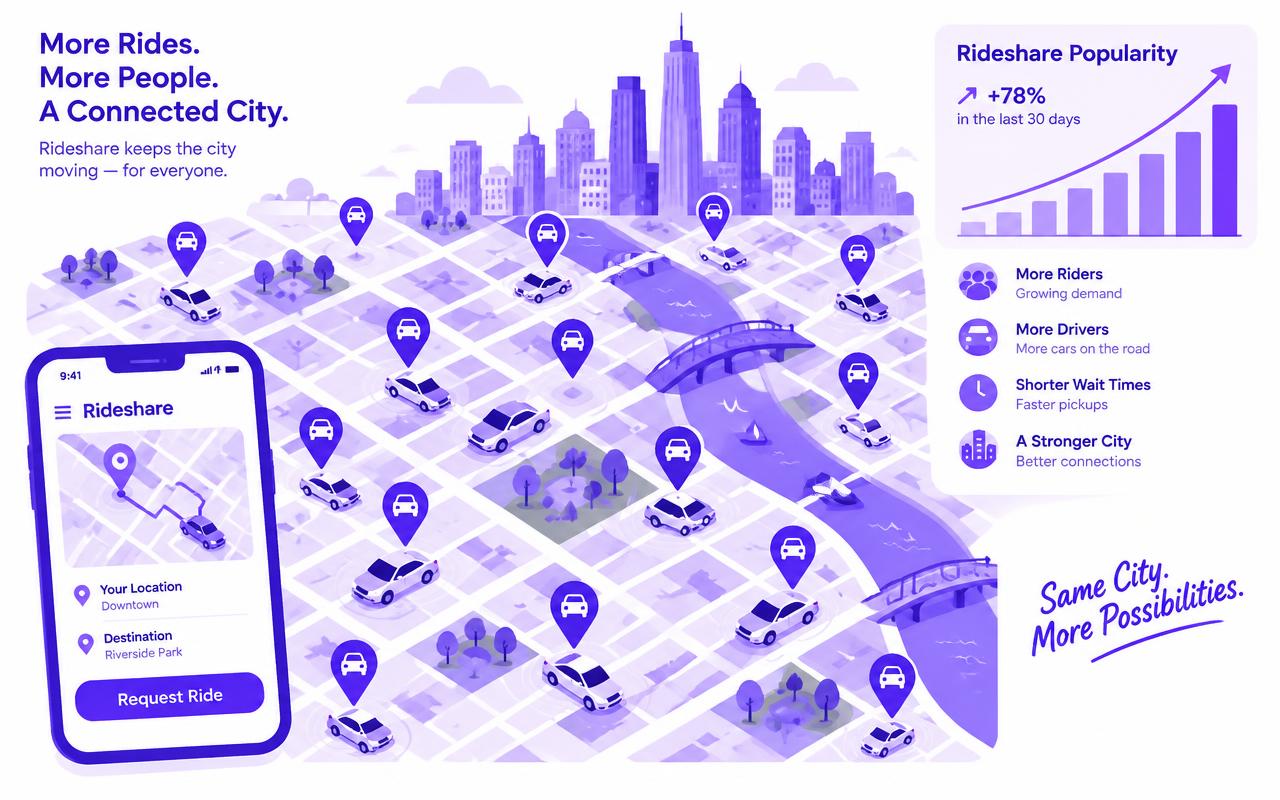
People often treat an app's popularity as a marketing number. In rideshare it is closer to infrastructure. The size and density of a platform directly changes how long you wait, what you pay and whether a ride shows up at all in your neighbourhood.
The network effect, in plain terms
Every new rider makes the platform more attractive to drivers, because there is more work available. Every new driver makes it more attractive to riders, because cars are closer. That loop is why iSERVU pickup times keep falling in areas where the community grows — the improvement is created by the users themselves.
What riders actually notice as iSERVU grows
Growth shows up in small, practical ways:
- Shorter pickup times, especially at peak hours
- Better coverage in suburbs and outer neighbourhoods, not just downtown
- Fewer cancelled or unmatched requests late at night
- More consistent pricing, because supply keeps up with demand
Why people are choosing iSERVU specifically
The feedback we hear most often is about predictability: knowing the fare before you confirm, seeing the driver's details up front, and paying without a cash conversation at the end. Riders also mention that support answers actual trip problems — a fare dispute or a lost item — rather than sending a template.
Drivers, meanwhile, talk about transparent earnings and flexible hours. A platform only stays popular with riders if it stays worth driving for, so the two sides are linked.
The takeaway
Popularity is not a badge — it is shorter waits, wider coverage and steadier prices. The bigger the local iSERVU community, the better the service gets for everyone in it.