
How iSERVU helps communities — beyond getting from A to B
iSERVU Editorial · August 27, 2026
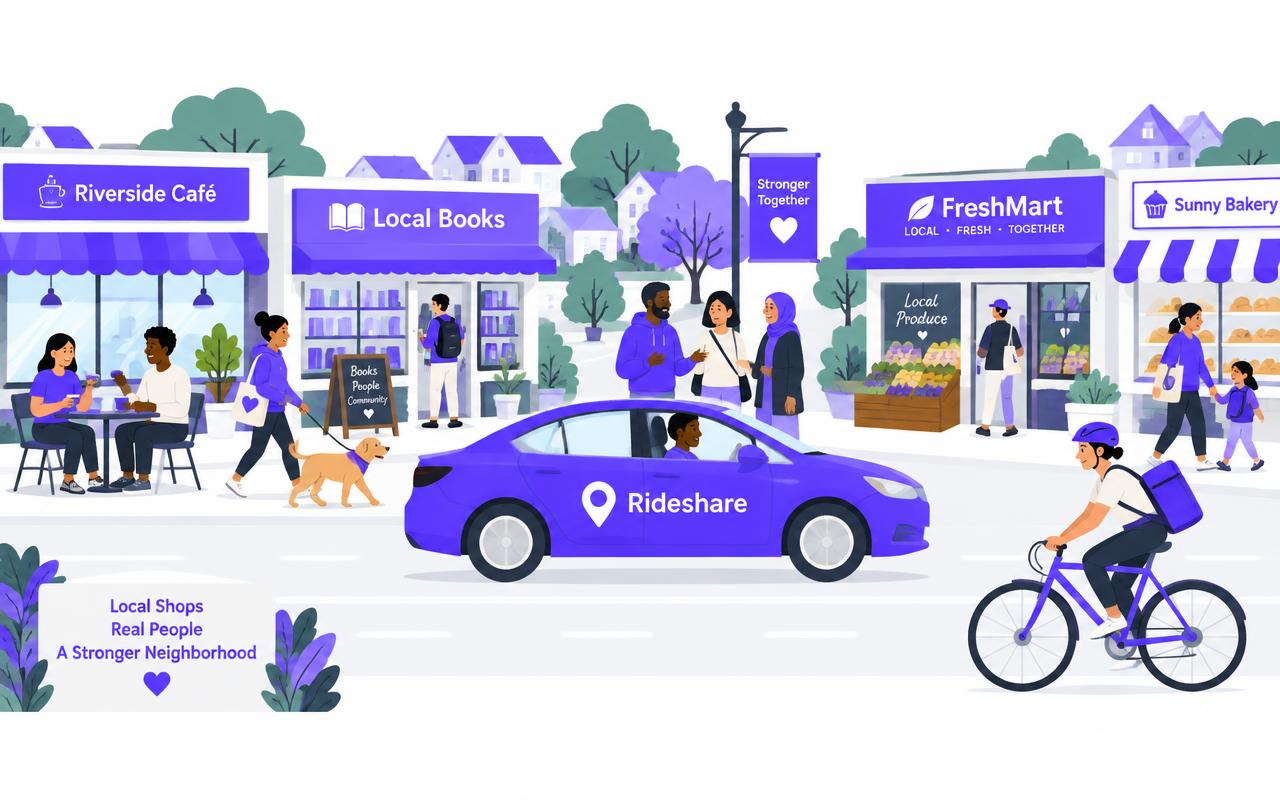
A ride looks like a private transaction between two people. Add up thousands of them in one town and you get something closer to public infrastructure — with effects on income, safety and local business that go well beyond the trip itself.
Money that stays local
Driver earnings are spent where drivers live: groceries, rent, school costs, local mechanics and car washes. Unlike many forms of work, the barrier to entry is low, which means the opportunity reaches people who are often locked out of formal employment.
Mobility for people public transport misses
Not everyone owns a car, and not every route is served well by buses — especially early mornings, late nights and outer neighbourhoods. On-demand rides fill those gaps for shift workers, older residents, people with limited mobility and anyone who simply cannot wait an hour for the next connection.
Safer nights and busier high streets
When a reliable ride home is a tap away, fewer people take the risk of driving after drinking or walking home alone late at night. That is a straightforward community safety benefit.
Local businesses feel it too. Restaurants, venues and evening events depend on customers being able to get there and get home. Convenient transport widens the catchment area of every small business on the street.
- Flexible income for residents, with a low barrier to entry
- Transport access where public routes are thin
- Fewer reasons to drive impaired
- More customers reaching local venues and events
- Fewer single-occupancy car trips and less pressure on parking
The takeaway
Community impact is cumulative: local earnings, real mobility for people without cars, safer nights and stronger local trade — one ride at a time.